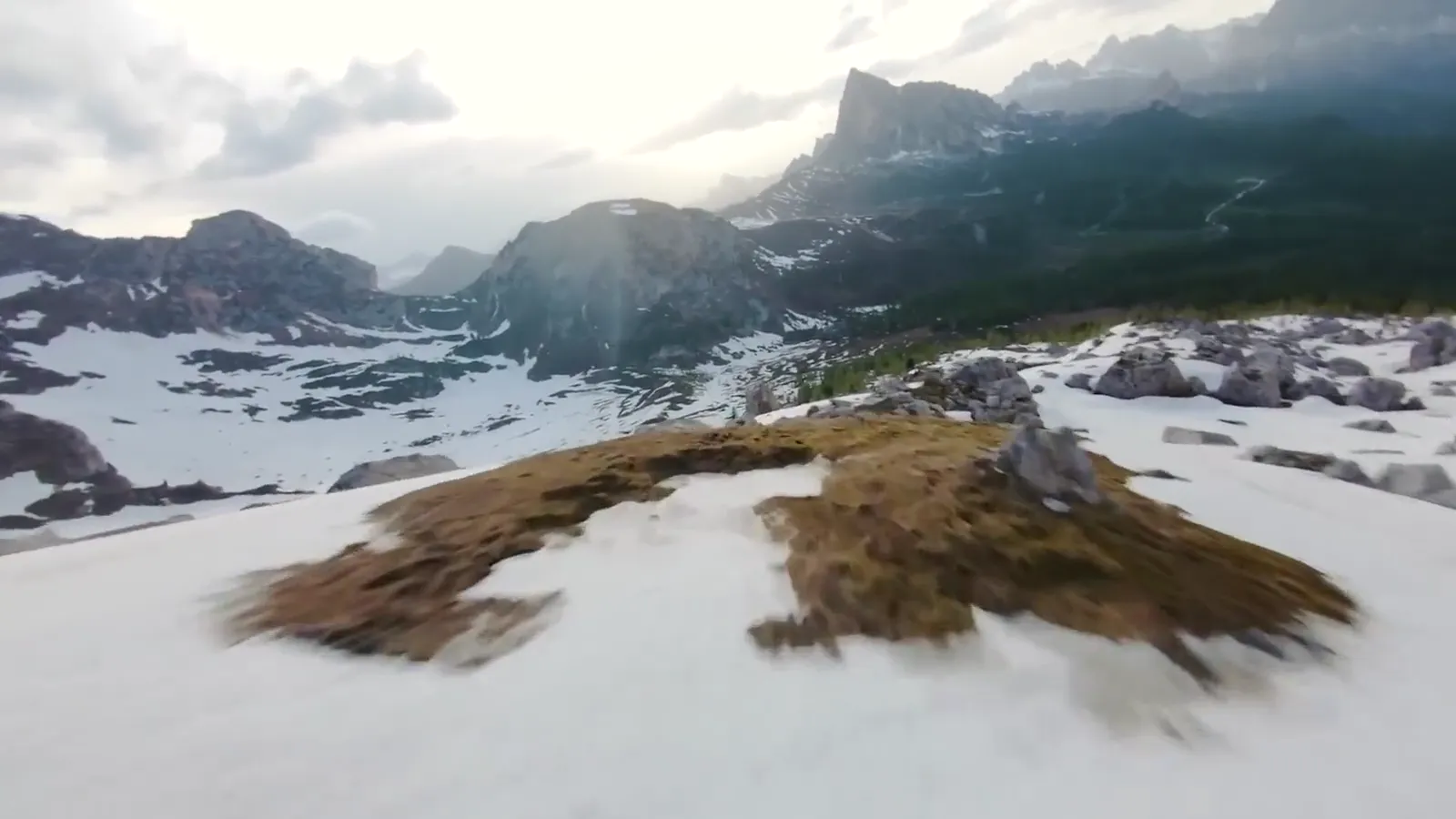
Why training data for robots has to be manufactured
Language models learned from the internet. Drones and robots have nothing like it, so someone has to make their training data.
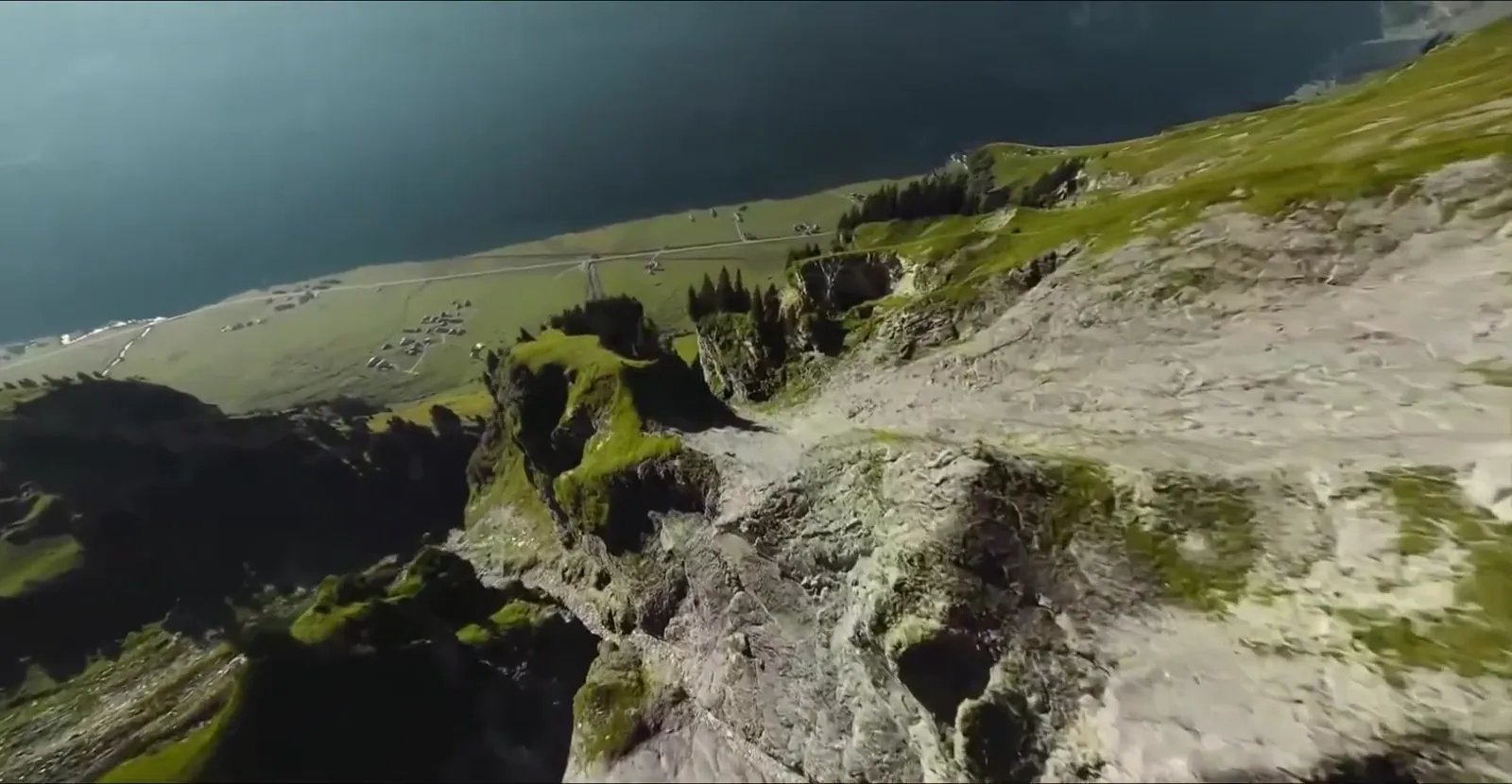
- AI for drones needs data from situations that are rare, dangerous or impossible to film.
- Simulation can produce that data, but only if it behaves like the real world, sensors included.
- So we build a drone simulator we can measure against reality, and we publish how well it does.
Over the last ten years, AI got good at language because the training data already existed. The internet held trillions of words, free to use.
The next wave of AI will work in the physical world: drones that navigate, robots that pick things up, machines that act. Here there is no ready-made data to learn from.
There is no internet for drones
Nobody has a huge archive of drones flying into low sun at 40 metres per second. Nobody has years of sensor logs from a drone shaking through smoke while its GPS is jammed. A language model can read a billion conversations. A drone can't crash a billion times to learn.
The usual answer is to collect more: more flights, more pilots, more people drawing boxes. That is slow, it breaks hardware, and it still misses the rare cases.
We took the other route. If the real world won't give us the data, we make it, accurately enough that a model trained on it works in the real world.
The rare cases are the ones that matter
Every drone team knows the pattern. The model works in good conditions. Then it meets glare, fog, a target that dodges, or a GPS signal that drifts, and it fails.
Those moments are exactly the data nobody has. You can't book a sunset glare for Tuesday. You can't safely stage GPS jamming over a city. You can't crash on purpose a thousand times to collect the failures.
Small errors also add up. A system that gets each step right 95% of the time finishes a ten-step task only about 60% of the time. Getting reliable means training and testing on many thousands of hard cases, and those have to be generated.
Pretty pictures are not enough
Most synthetic data today means beautiful images. But a drone doesn't fly on images alone. It combines its camera with motion sensors, a barometer, a compass and GPS, and a filter that blends them all.
Real sensors are imperfect. Gyros drift, cheap cameras smear fast motion, and every sensor reports with its own small delay. A model trained on perfect, noise-free data learns to trust a world that doesn't exist, then struggles in the real one.
So for us, realism means getting the flaws right, not just the looks. We model how real sensors behave, and we test that against real data before we claim it.
What we believe
Data for the physical world has to be made, not found.
There is no second internet. Someone has to build the training data for drones and robots on purpose.
Physics comes first.
If the simulated drone can do something a real one can't, the data teaches the wrong lesson. Our flight physics are checked against real firmware and real flight logs.
Sensors should be simulated as they are.
Real drones fly cheap, imperfect hardware. We model its noise and drift, because that is what the model will see in the field.
The same settings should give the same data.
Every run is seeded and repeatable. For safety-critical work, being able to reproduce a dataset exactly is what makes it trustworthy.
Trust has to be measured.
We compare our simulator with real data, publish the method, and say plainly what it does not prove yet.
What we are building
Two products on one drone simulator. The first makes labelled training data: you describe the scenario, we render it in Unreal Engine and label every frame automatically. The second tests your model: we fly it through fixed scenarios and score it against exact ground truth.
Underneath is our own flight physics, updated 1,000 times a second, and a flight controller that matches real Betaflight firmware. Our physics also beats a published model on real flight data, and we have already scored a published AI pilot inside the simulator.
Next is the result that matters most: training a drone detector on our data and testing it on real photos from a public dataset. We will publish the method, the code and the numbers, whatever they show.
We are Unconventional Robotics. We make the data that real flights can't safely give, so drone AI can be tested against everything the world can throw at it, before it flies.